
%20(Website)-1.png?width=958&height=325&name=LAMBDA%20LEARNING%20LOGO%201(%20px)%20(Website)-1.png)


10 Reasons Why Moodle LMS Software Is Essential in 2025
By Naama Sireni, Lambda Learning Inc.
The landscape of education and corporate training has shifted dramatically over the past several years, and 2025 represents a pivotal moment for organizations rethinking how they deliver learning. Remote work has become standard practice, hybrid classrooms are now the norm rather than an experiment, and learners of all ages expect digital experiences that match the polish of the consumer apps they use every day. Against this backdrop, the demand for robust, flexible, and cost-effective learning management systems has never been more urgent.
Moodle has emerged as one of the most influential players in this space, powering learning experiences for tens of thousands of organizations worldwide. As a leading open source LMS, it sits at the intersection of innovation, affordability, and community-driven development. Whether you run a global enterprise, a university, a vocational training center, or a small nonprofit, Moodle offers a foundation that adapts to your goals rather than forcing you to adapt to its limitations.
This article unpacks ten compelling reasons why Moodle LMS software has become essential in 2025, examines what to expect from the Moodle 5.0 release, compares Moodle to leading commercial alternatives, and walks through realistic pricing and implementation considerations.
What Is Moodle LMS Software?

Moodle LMS software is an open-source learning management system built to support online education, blended learning, and digital training programs of every size. Originally developed by Martin Dougiamas in 2002, Moodle has grown into a globally recognized platform that now powers courses for universities, corporations, government agencies, and nonprofit organizations on every continent.
At its core, Moodle provides a comprehensive toolkit for course creation, content delivery, assessment, and learner engagement. Instructors can build structured courses with multimedia lessons, run quizzes and assignments, host forums and live sessions, track learner progress, and award certificates of completion. Administrators gain granular control over user roles, permissions, branding, and reporting.
What truly distinguishes the moodle learning management system from commercial alternatives is its underlying philosophy. Moodle is built on the conviction that effective learning environments should be transparent, customizable, and accessible to organizations regardless of budget. Because the source code is openly available, organizations can inspect it, modify it, host it themselves, or rely on certified partners for managed services. This combination of pedagogical depth and technical openness has made Moodle the most widely adopted open source LMS in the world.
Moodle as a Leading Open Source LMS Platform
Moodle has earned its position as a premier open source LMS through more than two decades of continuous evolution and a thriving community of educators, developers, and partners. The platform's adaptability allows organizations to mold their learning environments to fit very specific pedagogical, regulatory, or branding requirements rather than forcing every institution into the same template.
Moodle software carries no licensing costs, which fundamentally changes the economics of deploying an LMS. Budgets that would otherwise be consumed by per-seat fees can be redirected toward content creation, learner support, and instructional design improvements that have a direct impact on learning outcomes. This is particularly valuable for institutions operating under tight financial constraints.
Research supports Moodle's reputation as a cost-effective and flexible solution.
Moodle: Cost-Effective Open-Source LMS with Flexibility & Community Support
This study investigated the feasibility and effectiveness of implementing open-source Learning Management Systems (LMS) in Federal College of Education (Technical) Asaba, as a cost-effective solution for online learning during these times of economic hardship. The study aimed to identify the potential benefits and challenges of adopting open-source LMS platforms, such as Moodle or Open edX in technical education programmes. A mixed-method approach was employed, combining both quantitative and qualitative data collection and analysis methods. The study's findings suggest that open-source LMS platforms can provide a cost-effective solution for online learning, reducing costs associated with proprietary LMS solutions. The study also identified potential benefits, including flexibility, customizability, and community support.
Implementing Open-Source Learning Management Systems (LMS) for Cost-Effective Online Learning in Federal College Education, 2025
10 Reasons Moodle LMS Software Is Essential in 2025
1. Unmatched Open-Source Flexibility and Customization
Moodle's open-source foundation gives organizations a level of control that proprietary platforms simply cannot match. Every aspect of the platform, from the user interface and navigation flow to grading logic and notification rules, can be adjusted to match how an institution actually teaches. Developers can write custom plugins, modify themes, integrate proprietary tools, and even fork the codebase for highly specialized use cases.
This flexibility matters because no two organizations learn the same way. A medical school running clinical simulations has very different requirements from a manufacturing company running compliance training, which differs again from a language academy delivering live tutoring. Trying to fit all three into the same rigid SaaS template forces compromises. Moodle, by contrast, lets each organization build a learning experience that reflects its actual workflow rather than working around someone else's product decisions. The result is higher learner satisfaction, better completion rates, and a platform that grows with the institution rather than constraining it.
2. Zero Licensing Costs and Transparent Pricing
One of the most significant advantages of choosing Moodle is the complete absence of licensing fees. The platform sits among the most capable free lms platforms available anywhere, and unlike trial-limited or feature-restricted "free" offerings from commercial vendors, Moodle's free tier is the full product. Every feature, every integration point, every line of code is available from day one.
This matters financially in ways that go beyond the obvious savings. Without per-seat licensing, organizations can experiment with broad enrollment, open up courses to alumni or extended communities, and scale into new departments without negotiating contract amendments. Budget conversations shift from "how many seats can we afford" to "how do we make learning excellent." Even after factoring in hosting, support, and customization, total cost of ownership for free learning management software like Moodle typically runs significantly below comparable commercial platforms over a multi-year horizon.
3. Enterprise-Grade Scalability for Any Organization Size
Despite its accessibility, Moodle is built for serious scale. Some of the largest Moodle deployments serve millions of active learners, and the platform's architecture has been refined over decades to handle massive concurrent usage. Whether you're supporting fifty learners in a single training cohort or half a million across a multinational enterprise, the same core software can underpin your deployment.
What changes at scale is the surrounding infrastructure. Larger deployments typically run on horizontally scaled web servers, dedicated database clusters, content delivery networks for media, and Redis or Memcached layers for session management. Because Moodle is self hosted lms software at its core, organizations have full control over how aggressively they invest in this infrastructure and can tune performance to their actual needs. This contrasts sharply with multi-tenant SaaS platforms, where performance is often a function of which subscription tier you've paid for rather than how well you've architected your environment.
4. Robust Compliance and Security Standards
Data protection has moved from an IT concern to a board-level priority, and Moodle is designed with this reality in mind. The platform supports GDPR compliance through built-in data subject access tools, consent management, and retention policies. It can be configured to meet additional regulatory frameworks such as FERPA for educational institutions, HIPAA when integrated with appropriate infrastructure, and various national data sovereignty requirements.
Because Moodle is open source, security is also community-audited. Vulnerabilities are surfaced and patched in the open, and organizations can review the codebase themselves rather than trusting a vendor's marketing claims. Self-hosted deployments give organizations the ability to keep sensitive learner data inside their own infrastructure, which is particularly important for government agencies, healthcare organizations, and any institution operating in regions with strict data residency laws.
5. Powerful Moodle LMS Features for Engaging Learning
Moodle ships with an extensive set of activity types and content tools designed to support engaged, active learning rather than passive consumption. Educators can build interactive quizzes with more than fifteen question types, branching scenarios, peer-reviewed assignments, collaborative wikis, glossaries, databases, forums, live sessions, and workshops. Multimedia content—video, audio, interactive H5P modules, and embedded third-party tools—integrates naturally into course flow.
Gamification deserves special mention as one of the most discussed moodle lms features.
Enhancing Moodle Efficiency with Gamification Technologies
The purpose of the study is to explore the possibility of using the functionality of the LMS Moodle system by introducing gamification technologies into the educational process to achieve specific educational goals. The main tasks of the work were to determine the possibility of increasing the level of efficiency of using the LMS Moodle system by introducing gamification technologies into the educational process; classification of gamification elements according to educational goals of different levels; development of an algorithm for introducing IT technology into the educational process. As a methodology, a systematic approach and logical methods were used, namely: analysis, synthesis and comparison, the method of logical interpretation; observation as a method of empirical investigation. The result of the study is the justification of the influence of gamification technology in the educational process by a complex effect on the primary motivation of students based on professional combination and consistent application of mechanics, dynamics, levels and components of gamification suitable for achieving a specific educational goal, smoothly flowing into a more conscious—internal motivation.
Improving the Efficiency of Using LMS Moodle in the Educational Process by Implementing Gamification Technologies, 2024
The researchers concluded that combining mechanics, dynamics, and components in alignment with specific educational goals produces a measurable lift in engagement and retention. Moodle supports all of these elements natively or through well-maintained plugins.
|
Feature |
Description |
Benefit |
|---|---|---|
|
Interactive Quizzes |
Engaging assessments with instant feedback and adaptive question pools |
Enhances retention and supports formative assessment |
|
Multimedia Support |
Native integration of video, audio, images, and H5P interactives |
Caters to diverse learning styles |
|
Gamification |
Badges, leaderboards, levels, and competency frameworks |
Boosts motivation and course completion |
|
Forums & Collaboration |
Threaded discussions, peer review, group workspaces |
Builds learning communities |
|
Adaptive Learning |
Conditional activities and personalized learning pathways |
Tailors content to individual learners |
6. Seamless Integrations with Business Systems
Modern learning rarely happens in isolation. Training programs connect to HR systems, customer education connects to CRM platforms, partner training connects to commerce systems, and compliance training connects to risk and audit tooling. Moodle's open architecture makes these integrations practical rather than painful.

Out of the box, Moodle supports LTI (Learning Tools Interoperability) for third-party tool integration, SCORM and xAPI for content portability, REST and web service APIs for custom integrations, and single sign-on through SAML, OAuth, LDAP, and other standard protocols. A growing catalog of pre-built connectors links Moodle to Salesforce, Microsoft Teams, Zoom, BigBlueButton, Stripe, PayPal, Workday, and many other enterprise systems. For organizations that need something specific, custom integrations are straightforward to build because the APIs are documented, stable, and openly accessible.
7. Mobile-First Learning with the Moodle App
Mobile learning is no longer a nice-to-have. A significant share of learners now access courses primarily from smartphones and tablets, and any LMS that treats mobile as an afterthought is going to struggle with engagement. Moodle's official mobile app, available for iOS and Android, gives learners full access to courses, assignments, quizzes, forums, and grades from their devices.
The app supports offline learning, which matters for field workers, students in regions with unreliable connectivity, and learners who want to continue progressing during commutes. Push notifications keep learners on track with deadlines and instructor messages. For organizations that want a custom-branded mobile experience, the Moodle App is itself open source and can be rebranded, restyled, and republished under the organization's own identity in the app stores.
8. Advanced Analytics and Reporting Capabilities
Learning programs that cannot be measured cannot be improved, and Moodle takes analytics seriously. The platform's learning analytics engine surfaces actionable insights about course engagement, assignment performance, time on task, and at-risk learners. Administrators can build custom reports through the report builder, schedule automated delivery to stakeholders, and feed data into external business intelligence tools through APIs.
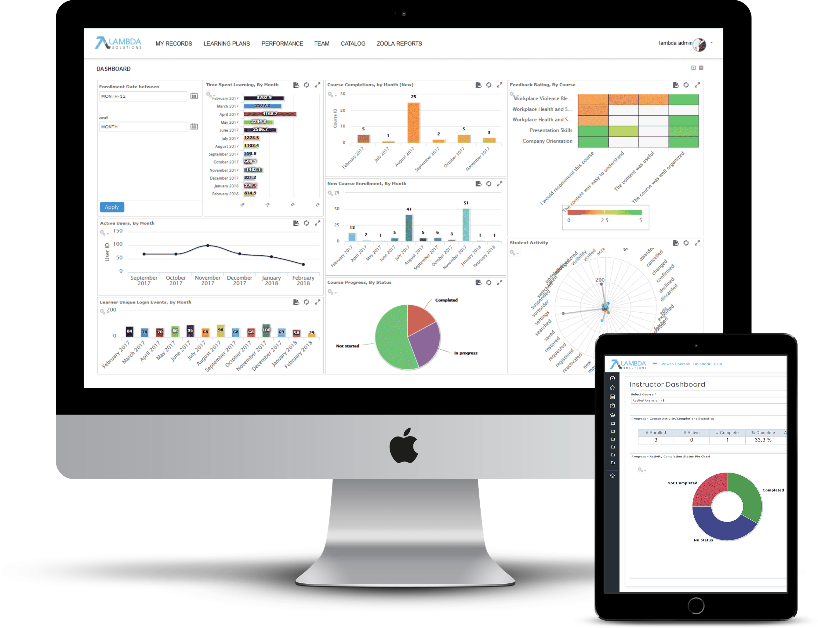
Predictive analytics, available through Moodle's analytics API and supported plugins, can flag learners who are likely to disengage before they actually drop out, giving instructors a chance to intervene early. For corporate L&D teams, this translates into more proactive coaching. For educational institutions, it supports better retention and timely academic interventions. And for compliance-driven training, detailed audit trails confirm exactly who completed what, when, and how they performed.
9. Thriving Global Community and Plugin Ecosystem
Few software products of any kind benefit from a community as engaged as Moodle's. Tens of thousands of developers, educators, instructional designers, and administrators contribute to the platform's development, share best practices in active forums, and publish plugins that extend functionality in nearly every conceivable direction. The official plugin directory contains more than two thousand plugins covering everything from advanced reporting and gradebook enhancements to virtual classroom integrations and accessibility tools.
This ecosystem is one of the strongest arguments for choosing Moodle over closed alternatives. When a need arises—say, a new compliance requirement, a novel teaching method, or an integration with a niche tool—there's a strong chance someone has already built a solution. And when a solution doesn't yet exist, the community provides documentation, code examples, and direct support that make it practical to build one. This collective momentum keeps Moodle continuously evolving in ways that no single vendor could replicate alone.
10. Expert Managed Moodle Hosting and Support
While Moodle is technically free to download and host yourself, many organizations prefer to focus on teaching and learning rather than server administration. Managed Moodle hosting providers bridge this gap by handling infrastructure, security patching, performance tuning, backups, upgrades, and tier-one user support. The result is the openness and flexibility of self-hosting combined with the operational simplicity of a SaaS product.
Specialized hosting providers offer service tiers that range from basic shared hosting suitable for small organizations to fully managed enterprise environments with dedicated infrastructure, SLAs, and consulting services. For organizations new to Moodle, working with an expert partner during the initial deployment dramatically reduces risk and shortens time-to-value. For established users, ongoing managed services free internal teams to focus on instructional design, content development, and learner experience improvements rather than firefighting infrastructure issues.
Moodle 5.0: New Features and AI Integration in 2025
The Moodle 5.0 release represents one of the most significant updates in the platform's history. While building on the familiar foundation that current users know well, this version introduces meaningful improvements to user experience, accessibility, and—most notably—artificial intelligence integration.
AI-Powered Course Creation and Content Generation
AI-assisted course building is the headline feature of Moodle 5.0. Educators will be able to generate draft course outlines, suggest activities, create question banks, and produce content summaries with the help of integrated language models. The goal is not to replace instructional design expertise but to accelerate the most time-consuming parts of course development so that educators can spend more time on the high-value work of refining pedagogy and engaging with learners.
Moodle 4.5: AI Integration for Personalized Learning & Engagement
The integration of artificial intelligence (AI) technologies into Learning Management Systems (LMS) represents a transformative advancement in contemporary education, enhancing personalization, efficiency, and interactivity. This study presents a systematic methodology for integrating AI technologies into the Moodle LMS. Moodle 4.5 was selected as the LMS owing to its modular architecture, flexibility, scalability, and integrated AI tools. This paper delineates the technical and pedagogical steps necessary for a successful integration process, including the installation of plug-ins, integration of APIs, customization of the system, and configuration of the AI menu. Moodle 4.5 simplifies the deployment and utilization of AI functionalities, offering an intuitive framework for creating dynamic and adaptive learning environments. AI integration improves student engagement, enables personalized learning pathways, and facilitates data-driven instructional decisions.
Integration and Application of Artificial Intelligence Tools in the Moodle Platform: A Theoretical Exploration, D. Kaleci, 2025
Moodle 5.0 operationalizes many of the patterns the study describes, including plugin-based AI providers, API integrations, and configurable AI menus that educators can use without writing code.
Enhanced Learning Analytics Dashboard
The new analytics dashboard provides educators and administrators with a comprehensive, customizable view of learner performance. Real-time engagement metrics, completion forecasts, and risk indicators are presented in a clean visual interface that supports drill-down into individual learners or roll-up across cohorts, departments, or programs. Custom report widgets can be saved and shared across teams, and the underlying data is accessible through APIs for integration with external BI tools.
New Activity Types and Accessibility Improvements
Moodle 5.0 introduces several new activity types designed to support more interactive, learner-centered experiences, including improved interactive video, expanded H5P integration, and refreshed assignment workflows. Accessibility receives substantial attention as well, with improvements to screen reader support, keyboard navigation, color contrast options, and alignment with WCAG 2.2 standards. These updates ensure that learners with disabilities can engage with course materials on equal footing with their peers.
Moodle LMS vs. Competitors: How Does It Compare?
When evaluating LMS options, it's helpful to understand how Moodle stacks up against the most commonly considered alternatives. Each platform has strengths, and the right choice depends on organizational priorities around cost, customization, ease of use, and ecosystem.
Moodle vs. Canvas LMS
Canvas is widely respected for its clean, modern user interface and strong mobile experience, and it has earned significant adoption in higher education. However, Canvas is a proprietary, subscription-based platform, which means organizations pay ongoing fees and have limited ability to modify the underlying software. Moodle's customization depth and zero licensing cost make it the stronger choice for institutions that need to tailor their learning environment or operate within tight budgets. For organizations that prioritize out-of-the-box polish over flexibility, Canvas remains competitive—but Moodle closes the UX gap further with each release.
Moodle vs. Blackboard Learn
Blackboard Learn offers a comprehensive feature set built up over decades, particularly for large universities with complex administrative needs. However, Blackboard is among the more expensive options on the market, and many institutions have grown frustrated with its pricing model and pace of innovation. Moodle provides a comparable feature footprint with no licensing fees and a much more open development model. Institutions making the switch from Blackboard to Moodle frequently cite cost savings and improved community support as primary motivations.
Moodle vs. TalentLMS
TalentLMS is a cloud-based platform popular with small and mid-sized businesses for its quick setup and approachable interface. It's a reasonable choice for organizations that need to get a training program running quickly with minimal IT involvement. However, TalentLMS offers far less customization than Moodle and operates on a tiered subscription model that grows expensive at scale. For organizations that anticipate growth or have specific workflow requirements, Moodle's open-source flexibility provides a more sustainable long-term foundation.
Moodle vs. Cloud-Hosted Free Alternatives
Some organizations evaluate Moodle against other free lms systems and lightweight cloud platforms that advertise no-cost plans. The important distinction is that Moodle's "free" is the full product, while many competing free tiers cap users, courses, storage, or features in ways that quickly force a paid upgrade. For organizations that want a genuinely capable platform without artificial restrictions, Moodle remains the strongest option in the online free lms category, and one of the few truly capable choices when searching for free lms online without compromise.
Moodle LMS Pricing: What Does It Cost in 2025?
Moodle's open-source license means the software itself costs nothing to download and use, but a realistic budget should account for hosting, support, and any customization or content development work. Understanding these costs upfront helps organizations plan accurately and avoid surprises.
Free Open-Source Moodle: What Is and Is Not Included
The core Moodle distribution is free and includes the full platform—every activity type, every administrative tool, every feature you'd expect in an enterprise LMS. The community edition is fully functional and production-ready, which is why so many organizations use it as the foundation of mission-critical training programs. As one of the most capable lms online free options available, it offers genuine enterprise depth without artificial limitations.
What the free download does not include is infrastructure, technical support, custom development, or done-for-you content creation. Organizations comfortable with running their own servers and managing their own systems can deploy Moodle entirely on their own. Those that prefer to delegate operational responsibility typically work with a hosting partner.
Managed Moodle Hosting Costs and What to Expect
Managed Moodle hosting services typically range from around $100 per month for small deployments on shared infrastructure to several thousand dollars per month for large enterprise environments with dedicated resources, advanced SLAs, and consulting support. Most mid-sized organizations land somewhere between $500 and $2000 per month for solid managed hosting with reliable performance, regular backups, security patching, and responsive support. This range remains a fraction of what comparable proprietary LMS subscriptions typically cost, particularly as user counts grow.
Beyond hosting, organizations may invest in custom theming, plugin development, content migration, instructional design, or learner support services. These costs vary widely depending on scope but should be evaluated as one-time investments that pay dividends over the multi-year life of the platform.
How to Implement Moodle LMS for Your Organization
Successful Moodle implementation depends less on technical configuration and more on thoughtful planning around goals, content, and learner experience. A structured approach prevents the most common pitfalls and accelerates time-to-value.
Begin by clearly defining what success looks like. What learning outcomes matter? Which audiences will use the platform? What integrations are essential on day one versus nice-to-have later? With these answers in hand, selecting hosting, customization scope, and rollout sequence becomes much clearer. From there, organizations typically move through pilot deployment, content development, user testing, instructor training, broader rollout, and ongoing iteration based on analytics and learner feedback.
Moodle LMS for Corporate Training Programs
For corporate training, Moodle excels at handling compliance training, sales enablement, onboarding, leadership development, and customer education programs. Its integration capabilities mean it can plug into existing HR systems for automated enrollment, into CRMs for sales training, and into commerce platforms for paid customer education. Advanced reporting supports the kind of detailed audit trails that compliance officers and L&D leaders need to demonstrate program effectiveness and regulatory adherence.
Moodle LMS for Higher Education Institutions
Higher education was Moodle's original home, and the platform continues to serve universities and colleges exceptionally well. The combination of scalability, flexibility, and instructional depth supports everything from large undergraduate lectures and seminar-style courses to graduate research programs and continuing education. Strong community support means institutions can connect with peers who have solved similar challenges, share resources, and contribute to the platform's continued evolution.
Moodle LMS for K-12 and Vocational Training
Beyond higher education and corporate environments, Moodle has become a popular choice for K-12 schools, vocational training providers, and certification bodies. Its accessibility features, parental access options, and ability to support both synchronous and asynchronous learning make it well-suited to younger learners and competency-based programs alike.
Frequently Asked Questions About Moodle LMS Software
What is Moodle LMS software?
Moodle LMS software is an open-source learning management platform designed for online learning, blended learning, and corporate training. It offers a comprehensive toolkit for course creation, content delivery, assessment, learner engagement, and analytics, and it powers learning experiences for organizations of every size across the globe.
Is Moodle LMS free to use?
Yes. Moodle's core software is genuinely free as an open-source platform, with no per-user licensing fees and no restrictions on features or course volume. Organizations do typically invest in hosting, technical support, and customization, but the software itself remains free in perpetuity. It is one of the most capable free online lms options available today.
What are the main features of Moodle LMS?
Key moodle lms features include interactive quizzes with more than fifteen question types, multimedia content support, gamification elements, collaborative forums and workshops, competency frameworks, advanced analytics and reporting, mobile learning through the official app, SCORM and xAPI support, and a vast plugin ecosystem that extends the platform in nearly every direction.
How does Moodle 5.0 integrate AI into learning?
Moodle 5.0 introduces AI-assisted course creation, content generation, and question authoring through integrated language model providers. AI capabilities help educators draft outlines, build quiz banks, summarize content, and personalize learning pathways. Configurable AI menus give administrators control over which features are enabled and which providers are used.
Is Moodle LMS good for corporate training?
Yes. Moodle is widely used for corporate training because of its flexibility, scalability, robust reporting, and strong integration capabilities. Organizations use it for onboarding, compliance, sales enablement, leadership development, customer education, and partner training. Its zero licensing model also makes it attractive for companies looking to extend training to broader audiences without spiraling per-seat costs.
How customizable is Moodle LMS software?
Moodle is one of the most customizable LMS platforms available. Its open-source code can be modified, extended, or rebranded in any way an organization needs. Plugins extend functionality, themes control branding and visual design, and APIs support integration with external systems. For organizations with unique workflows, this level of control is one of Moodle's most compelling advantages.
How does Moodle LMS compare to other LMS platforms?
Moodle stands out for its open-source model, zero licensing costs, deep customization, and global community. Compared to Canvas, it offers greater flexibility at lower cost. Compared to Blackboard, it provides similar enterprise capabilities without expensive licensing. Compared to TalentLMS and other SaaS-only platforms, it offers far more control and significantly better economics at scale.
What Moodle LMS support does Lambda Learning provide?
Lambda Learning specializes in Moodle and Totara-based eLearning platforms, providing managed hosting, technical support, instructional design services, custom development, and strategic consulting for organizations across corporate, government, education, and nonprofit sectors.
What is the recommended Moodle LMS implementation process?
The recommended process starts with defining clear learning objectives and success metrics, followed by selecting appropriate hosting and partners, designing the platform architecture, developing or migrating content, training administrators and instructors, piloting with a small group, refining based on feedback, and rolling out broadly with ongoing measurement and iteration.
What does Moodle LMS cost in 2025?
The core software is free. Managed hosting typically ranges from around $100 per month for small deployments to several thousand per month for large enterprise environments, with most organizations landing between $200 and $500 monthly. Additional costs may include custom development, content creation, and instructional design services depending on scope.